

History of Brass: The Classical Era
Welcome to the grand finale of A Brassy History with Grant Golding! As we glide into the Classical period (1730-1820), we find ourselves in an era of significant change. This relatively brief period saw monumental shifts in music, culture, and technology. Trumpet players, once the rock stars of the Baroque era, adapted to new roles, while trombones made a dramatic comeback.
The Haydn Trumpet Concerto: a landmark composition
Joseph Haydn's trumpet concerto stands tall as a significant milestone. Written for a newly invented trumpet, it was initially not widely celebrated, but today, it's a crown jewel in the trumpet repertoire. This piece reflects the innovation and elegance of the Classical era.
Mozart, Beethoven, and the giants of the Classical Era
The Classical period was studded with legendary composers like Mozart and Beethoven. Mozart, known for his mischievous pranks, left a legacy of compelling music and wild stories. Beethoven, a maestro battling deafness, inadvertently revolutionized the symphony orchestra's size. His struggle with hearing led to the expansion of orchestral sections, laying the foundation for the modern orchestra's structure.
Life in the Classical Era: from lavish wigs to revolutionary ideas
This era wasn't just about music; it was a period of profound social and scientific advances. The Industrial Revolution was in full swing, bringing new wealth and transforming society. Iconic figures like Isaac Newton and Robbie Burns left their indelible marks, while Jane Austen penned novels that still resonate today.
 Classically quirky cuisine and fashion
Remember the Baroque wigs styled with pig fat? The Classical period had its own quirks. Fashion remained elaborate, but now with the added challenge of containing lice. Culinary habits also evolved, with meat, game, and fish remaining staples for the wealthy, while the less affluent turned to porridges, stews, and the ever-popular 'piece.'
Technological breakthroughs and the brass (r)evolution
The Classical period was a hotbed of innovation and revolution. The first steamship crossed the Atlantic, Faraday pioneered the electrical engine, and the battery made its debut. All these advancements were set against the backdrop of political turmoil, including the French Revolution and the rise of Napoleon.
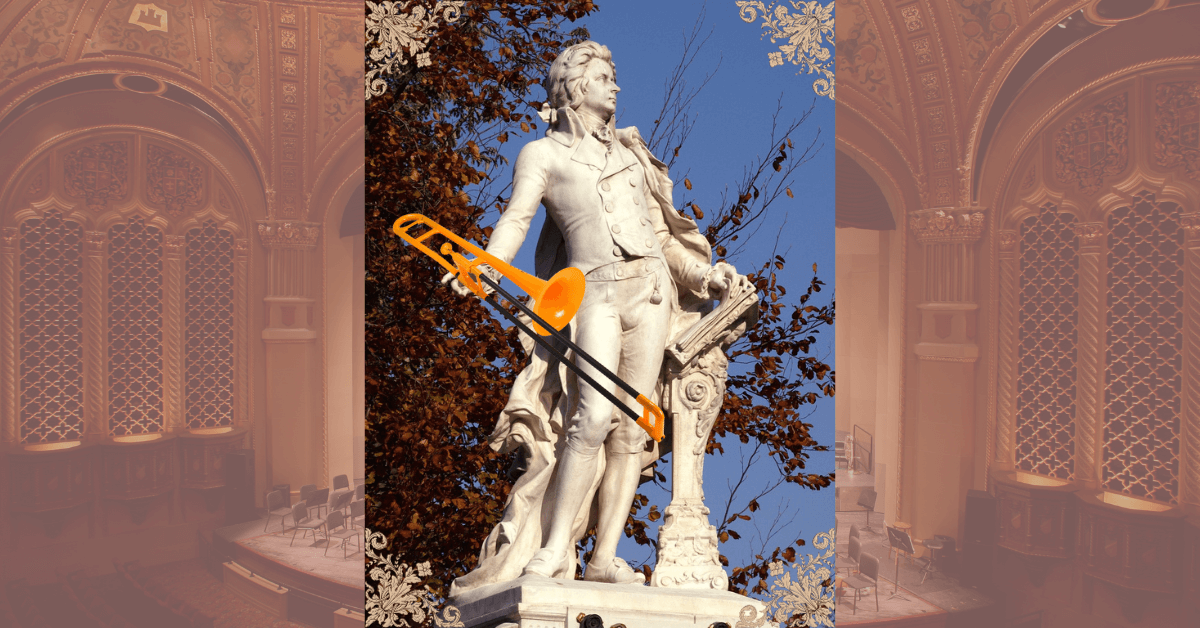
Brass instruments during this time saw a return to simpler roles, with fanfares and military-style music dominating. The art of trumpet playing evolved from the flashy techniques of the Baroque period to more structured, symphonic contributions. Trombones, too, found their place in orchestras, often symbolizing the supernatural in Mozart's compositions.
Beethoven's Ode to Joy: A Symphony for the Ages
Our journey concludes with Beethoven's Ninth Symphony and its iconic Ode to Joy. This piece, a testament to Beethoven's genius, was composed when he was nearly deaf. The story of its premiere, where Beethoven couldn't hear the audience's rapturous applause, is a poignant reminder of the power of music to transcend personal struggles.
Now that we know the story about Classical music, let's hear it from Grant, and the full video episode of A Brassy History:
Classical brass and goodbye to A Brassy History
As we bid adieu to the Classical period, we reflect on how brass instruments not only adapted to the changing musical landscape but also helped shape it. From fanfares to symphonies, the versatility and resilience of brass instruments are evident. Their evolution mirrors the broader cultural shifts of their time, making them not just instruments, but storytellers of history.
- Watch and learn about everything from cavemen to Classical with the complete YouTube playlist for A Brassy History!
- Before the Classical Era came the Baroque. Find out more in the third episode of A Brassy History series.
- Check out more free educational resources from Grant Golding on his YouTube channel, BrassBlastUK.
