

Can Music Help Kids Learn to Read?
Music and reading comprehension may appear pretty different on the surface.
Learning to play a musical instrument is fun, it's active, and it probably involves your child making a racket.
Giving a young child a tambourine, a recorder, or a ukulele often provokes a different reaction to handing over a pile of books.
But research shows that early exposure to instrumental training can have a positive impact on a child's reading comprehension.
After all, music encourages focus and creativity. It enhances memory, it introduces new words and vocabulary. It also makes learning new concepts fun.
Let's take a closer look at the relationship between music and reading and uncover how you can help your child's reading comprehension with a new secret weapon: music!
Music and language
Neurologists have found that music and language share a processing network in the brain. Evolutionary anthropologists believe that humans developed the capacity to process music and rhythm first and that this allowed the development of language.
Babies respond to sounds, rhythm and melody before they begin to learn a language. They respond to music long before they understand words, and they mimic speech in the same way they mimic music. The early speech patterns of a young child follow the rhythmic and repetitive sound patterns found in music.
Music and reading
Speech is the basis of reading, but children must first be able to tell speech from other sounds. Music helps them to do this. Neurologically, the same processing network is shared by music and speech.
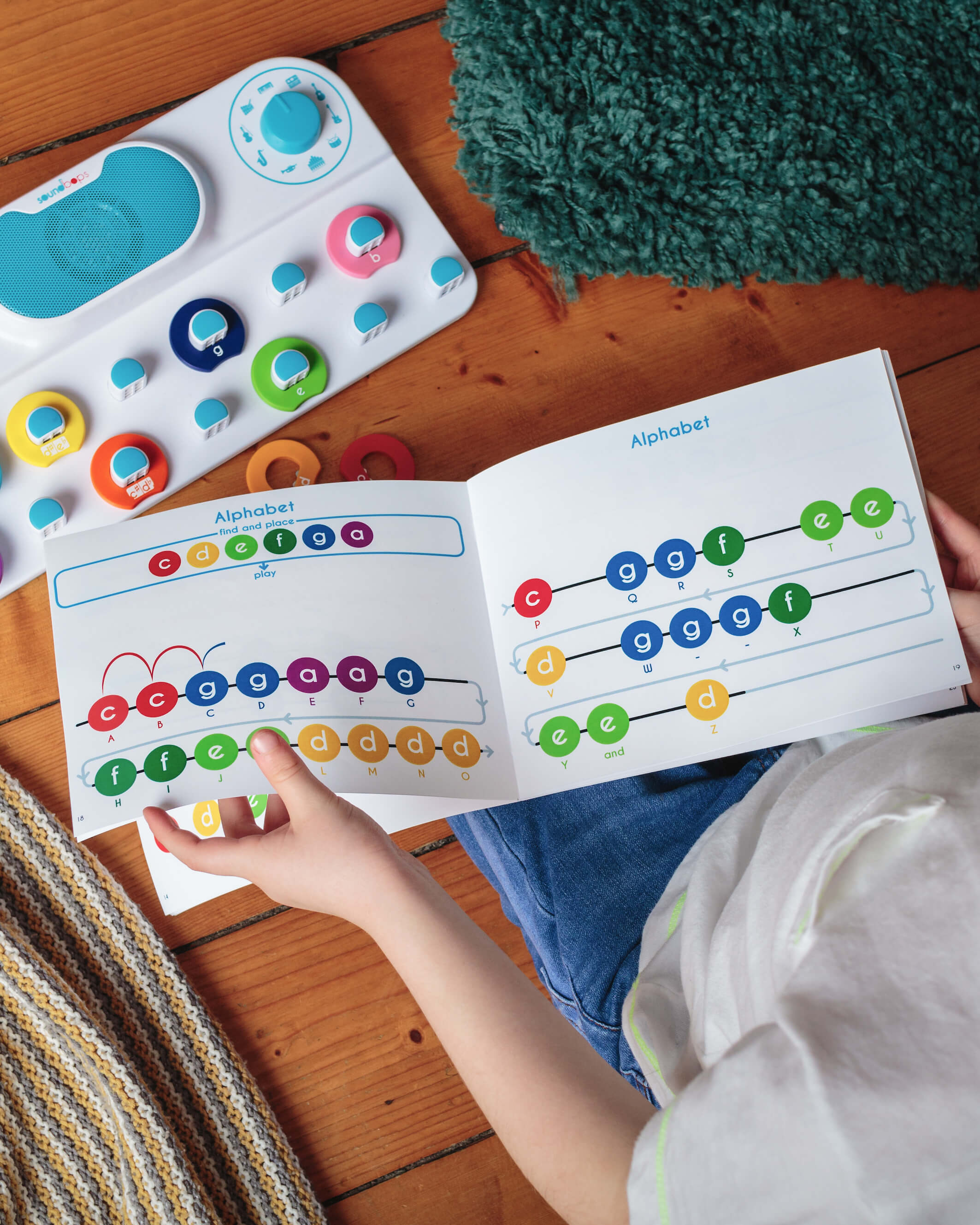
In the end, reading is the ability to connect visual symbols with sounds. Learning to read music measurably enhances this skill, especially when the symbols are colourful and easy to follow. Research has shown a clear connection between learning to read music and reading comprehension.
How can I use music to help with my child's reading comprehension?
Talking and singing to babies – even pre-natal babies – helps to create a parental bond, and helps babies learn to differentiate between speech and other sounds. Their auditory network will lay down synaptic paths that will prepare them for growing linguistic skills.
Introducing toddlers to music classes, particularly those that encourage singing and activities, will help build musical skills that lay the ground for reading.
For pre-schoolers, beginning to learn to read as well as play music pays huge dividends in advancing reading skills. The songs and rhymes they learn and enjoy will have an impact. Courses and classes led by qualified teachers and developed by educational psychologists will give a child a significant reading boost.
Learning music can make reading easier
Learning to read musical notation and symbols is an important stage in many musical journies. This should be balanced with the fun that music can bring, enjoying collaboration, expression, and improvisation.
Associating symbols with sounds is central to the process of learning to read. The building of music reading skills can, like all good education, be taught in an ascending series. Children can start slowly and build their understanding, while subtly improving their reading comprehension skills at the same time!
Equipping children with these skills and providing this experience can ensure they are better prepared for what comes next. As your child grows and develops their fine motor skills, this could be a move to a traditional musical instrument.
Children who can already read music and have an understanding of the processes of music have a significant advantage when taking up an instrument.
And away from music, it could be the tool to help your child build confidence with reading comprehension.
Can the latest artificial intelligence help your child to play an instrument? Find out about the top AI tools for music learning.
Still unsure about reading music? Check out the pros and cons of learning to read music.
