

Why a Plastic pBugle Was the Perfect Choice for RSC’s Hamlet
When James Stretton stepped onto the stage at the Royal Shakespeare Company this spring, he wasn’t just bringing the sound of a royal funeral to life - he was doing it on a plastic beginner bugle.
The Warwickshire-born brass virtuoso has had a storied career, from his early days in local music services to international stages and now to the haunting maritime world of Hamlet, directed by Rupert Goold.
But even with all that pedigree, the star of this latest production?
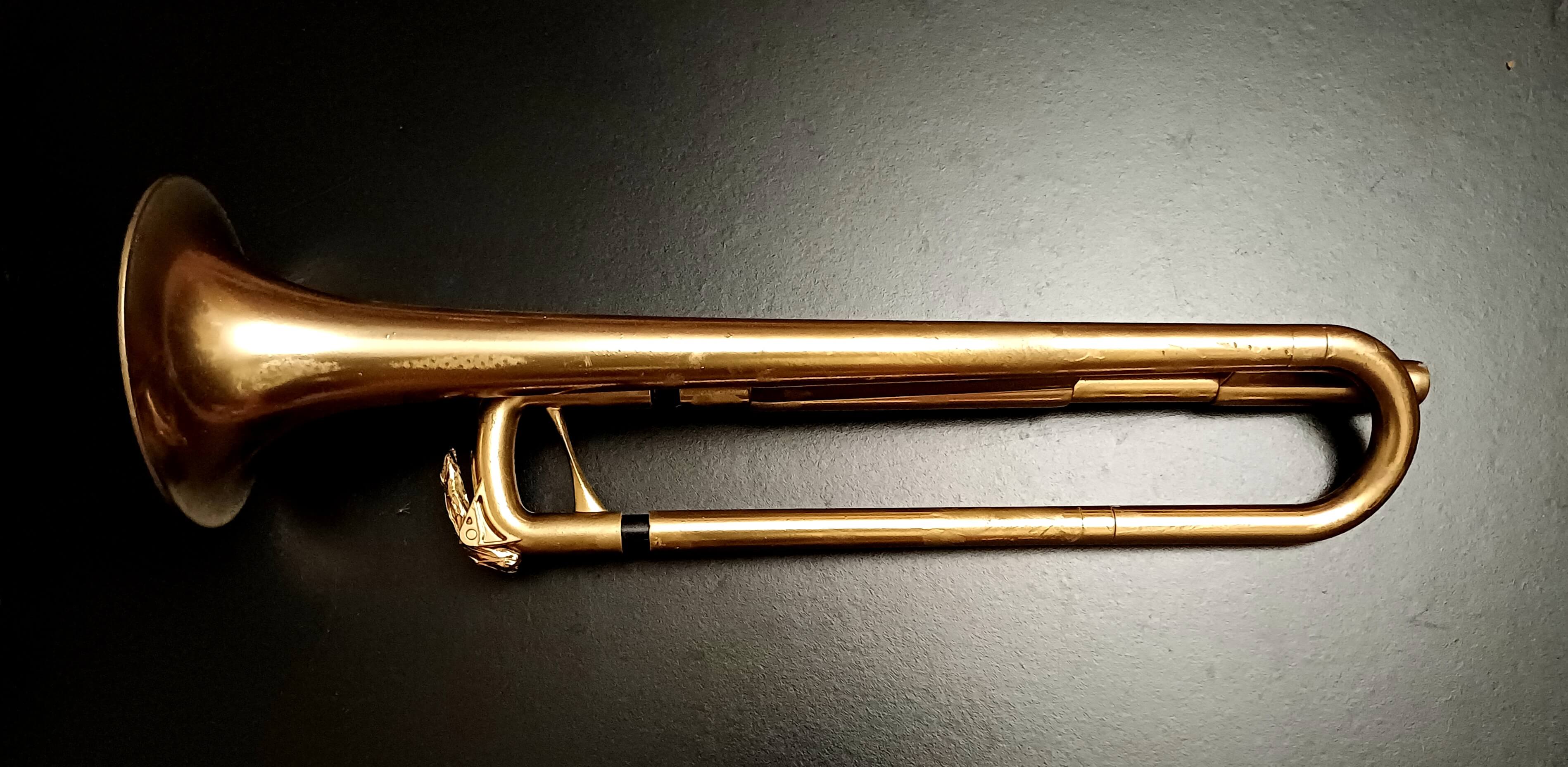
A painted gold pBugle.
Yes, the same instrument designed to help children blast their first notes is also perfectly at home among crashing waves, off-stage choirs, and Shakespearean tragedy.
To p Or Not to p, That is the Question...
The RSC’s 2025 production of Hamlet opens with a striking burial-at-sea sequence. T
ony Award-winning composer Adam Cork crafted a brooding musical score to match the nautical reimagining of this classic tragedy.
Jim explains:
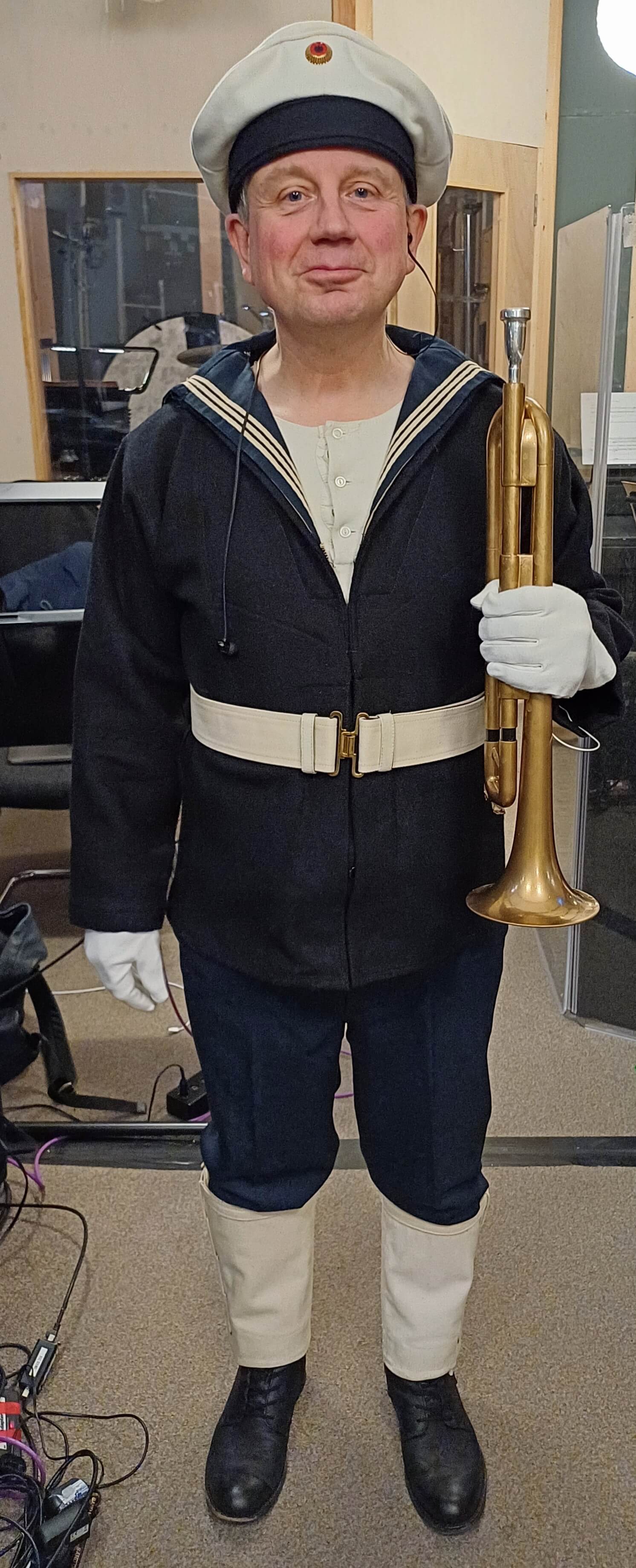
“The opening scene is a grand royal burial at sea with atmospheric music that combines the off-stage orchestra, the cast singing, the sound of crashing waves and me on stage, in costume, playing live bugle calls.”
That haunting brass line might sound like a traditional military call, but it wasn’t played on a centuries-old bugle.
“When I received the music for the show to prepare, I tried the opening bugle solos on my traditional short model Bb army bugle.
However, musically, this just wasn’t satisfying. The tuning and tone were authentically military but not sufficiently refined for the RSC stage.
So I tried my bright red pBugle.
It sounded absolutely fantastic, and perfect for this opening number.”
What won Jim over wasn’t just the convenience: it was the sound.
“The harmonics are rock solid and entirely predictable...the tone is fantastic. Plus, the dynamic control is so responsive and nuanced.”
The only problem? A bright red bugle doesn’t exactly scream regal mourning.
Cue the RSC props department.
“The bright red colour of the pBugle did not fit in with royal funeral aesthetic, but the RSC props team soon worked their magic and made the pBugle look like it was manufactured from metal.”
Meet Jim Stretton: A Brass Jack-of-All-Trades
Jim’s musical journey started, appropriately enough, in the heart of England, not far from Stratford-upon-Avon. He took his first lessons through the Warwickshire peripatetic system, studying with Karen Drayton and Jim Norden.
From there, it was a steady ascent: county ensembles, Trinity College London (studying under Ian Wilson and Norman Burgess), and prize-winning concerto performances during his student years.
Thanks to the encouragement of Philip Jones, then Principal at Trinity, Jim secured funding to study abroad with James Austin in Houston, Texas.
After returning to the UK, he dipped into the world of full-time teaching, while still making time for performances with legendary brass bands like Black Dyke and Grimethorpe.
When he returned to the professional stage full-time, he played with the CBSO and RLPO, but also began carving out his own niche with Brassed UP!, a multi-instrumental brass show with pianist Iain Jackson.
“We did hundreds of recitals, concerts, workshops & shows.”
His first foray into the RSC came in 2008 with Romeo and Juliet, followed by Julius Caesar and Richard II with David Tennant, including two tours to New York.
And yes, all the while, he kept his trumpet chops sharp - alongside Tuba, Trombone, Euphonium and French Horn. During the COVID lockdowns, he expanded his skills even further with multi-track recording and composition for library music.
“This really kicked my multi-instrumental skills up to the next level.”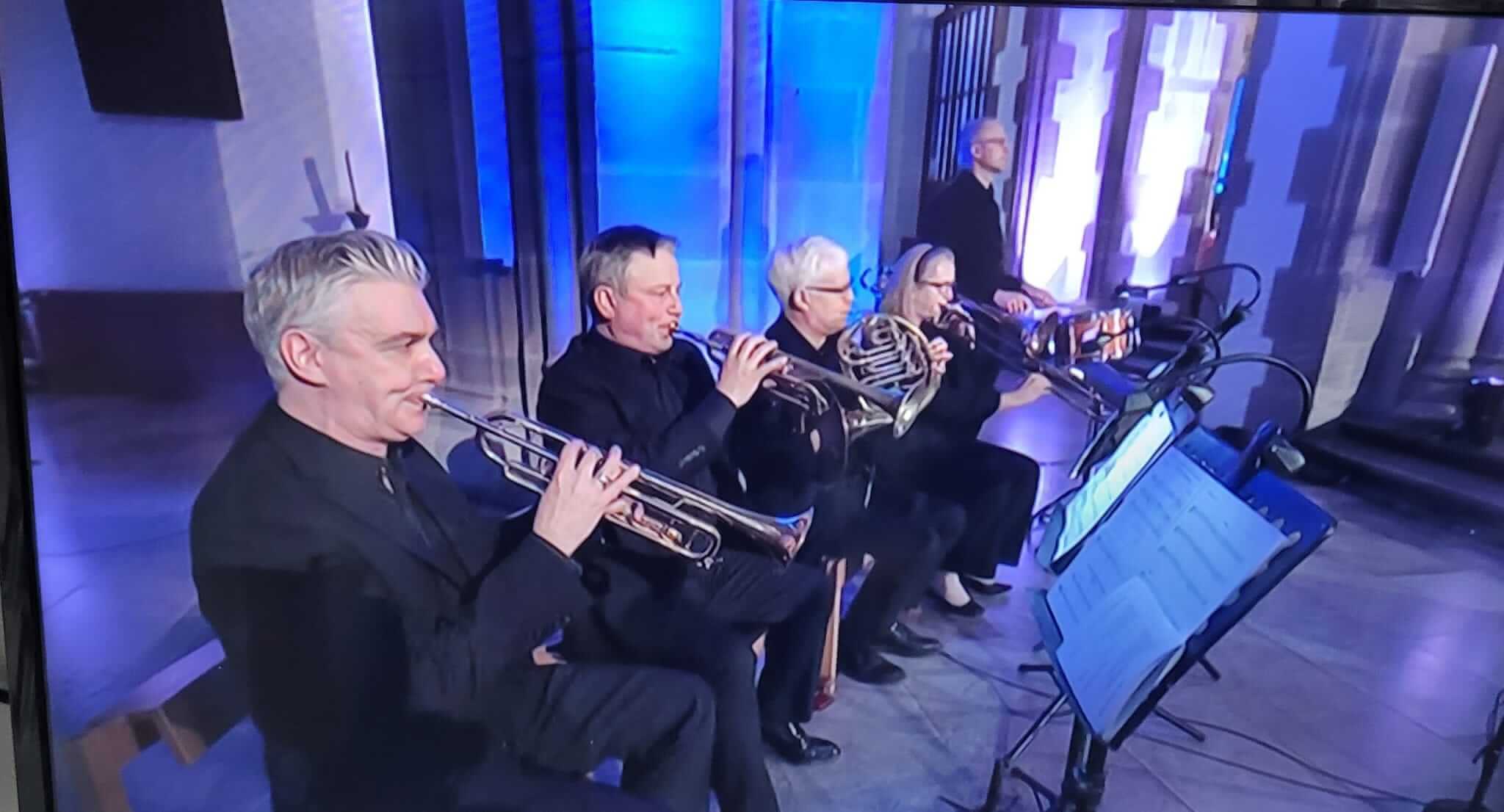
So, What’s a pBugle Doing in Hamlet?
Let’s be clear: the pBugle wasn't exactly designed with the RSC in mind: it was created for schools and beginners.
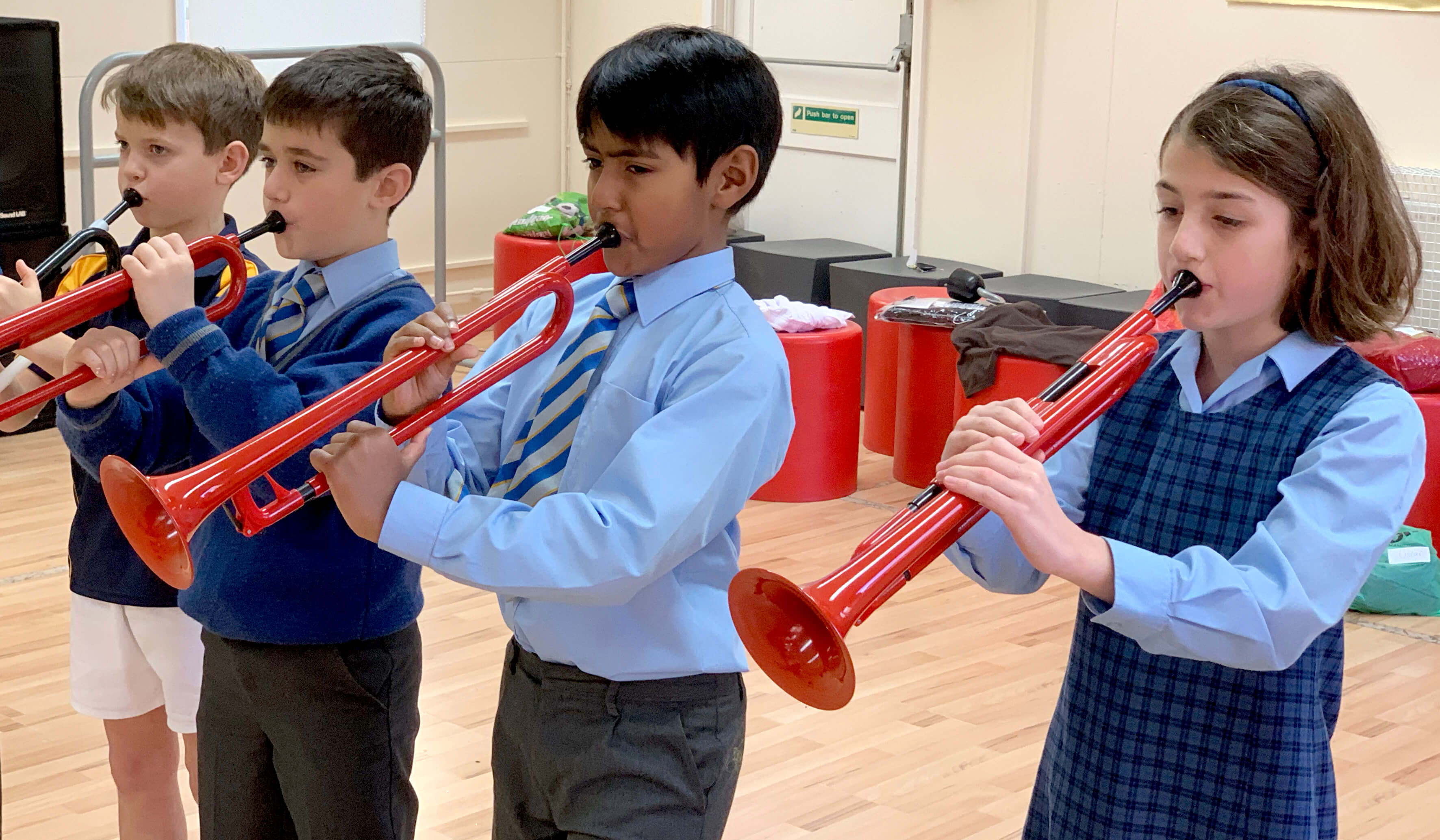
Lightweight, durable, and delightfully simple, the pBugle is often a child’s first foray into brass. It strips things back to the fundamentals - no valves, no fuss - just lips, breath and buzz.
But that simplicity is exactly what makes it so effective.
“The harmonics are so solid, and you don’t have to manufacture the pitch like you have to do on traditional short bugles. The notes are exactly where you expect them and need them to be.”
This predictability makes it perfect not just for professional performers needing a dependable tone on stage, but also for young players just discovering how brass works.
It’s not a full trumpet replacement, but it’s a brilliant stepping stone. In classrooms, it teaches musical awareness, pitch, breath control and embouchure in a way that’s intuitive and instantly rewarding.
And if a bugle can hold its own at the RSC, it’ll certainly make a school hall sing.
The Professional’s Choice and the Classroom’s Best Friend
Jim isn’t the only one using the pBugle beyond the classroom, either.
We’ve seen players across the UK turn to it for the Last Post, for Armistice Day commemorations, and for small venue performances where traditional bugles can be a bit temperamental.
“The Next LAST POST I’ll do – will be on the pBugle.”
It’s a ringing endorsement. But let’s not lose sight of the original mission. This is a tool built for fun, for access, and for learning.
The fact that it can also sound incredible in the hands of a pro? That’s just the cherry on top.
And for those worried about the colour? Jim has a solution there, too:
“I had to get RSC to paint my pBugle – any chance you could actually paint them metal colour or use a brass coloured plastic?”
Watch this space, Jim...
Advice from the Pit
We asked Jim what advice he might have for the next generation of players - especially those who might one day swap the school band for the orchestra pit or the Shakespearean stage.
His advice?
“Work hard, be reliable and punctual, take a huge variety of lessons, be in the right place at the right time – and recognise that fact when you’re there.”
No shortcuts. Just solid skills, a strong work ethic (and a pBugle, apparently).
With Hamlet now wrapped at Stratford, Jim’s headed back on the road, preparing workshops, continuing his work as an examiner with Trinity College London, and no doubt appearing in a rehearsal room or orchestra pit near you soon.
But wherever his journey takes him next, one thing’s for sure: the pBugle will be close at hand.
- For more information about pBugle and details of where to purchase, check out the pBugle product page.
- Picked up a pBugle and want to get started? The Learn to Play pBugle area is packed with resources.
- Wondered why pBugle is tuned to Bb? Haven't we all. Luckily, Chris Fower has the answer...
