

Building a More Complete Brass Section
Keeping your band program strong means providing your students with every advantage they can get to succeed. To administrators, however, numbers also matter. If 10% of the students join band, your program is weaker than if 30% or 40% join AND stay. For decades, beginning band recruiting and retention have really not changed. Today, though, there is another tool that is working to begin and keep more trombone and trumpet players in your program.
Developing young brass players has many challenges. Probably one of the most significant is the size of most brass instruments in the hands of young players. Some, of course, love the challenge of instruments that are bigger than they are, but many more can be intimidated enough to steer away from an instrument like the trombone. Yet, starting enough players to fill out all the brass instrumentation is key to better-performing bands. Even trumpet and French horn have their struggles.
This is not just a U.S. phenomenon. In the United Kingdom, where brass bands dominate the musical landscape, the trombone, for example, was named an “endangered species”. So few children were choosing to play the trombone that brass band players and fans were duly concerned that this 100-year-old plus tradition was reaching a crisis. By extension, all low brass was threatened.
Cole’s Music, a school music dealer in Sewell, New Jersey (just south of Philadelphia), saw the same issue. LauraLee Houghton who, together with her father, owns Coles Music and their general manager, Russ Coleman, saw the impact directly.
“Several years back we had a teacher ask us about getting more kids interested in the lower brass instrumentation because trombones mostly are something that kids aren't willing to try. They are a little bit intimidated by the size of it, and how heavy it is, and so on."
Russ Coleman, Coles Music General Manager
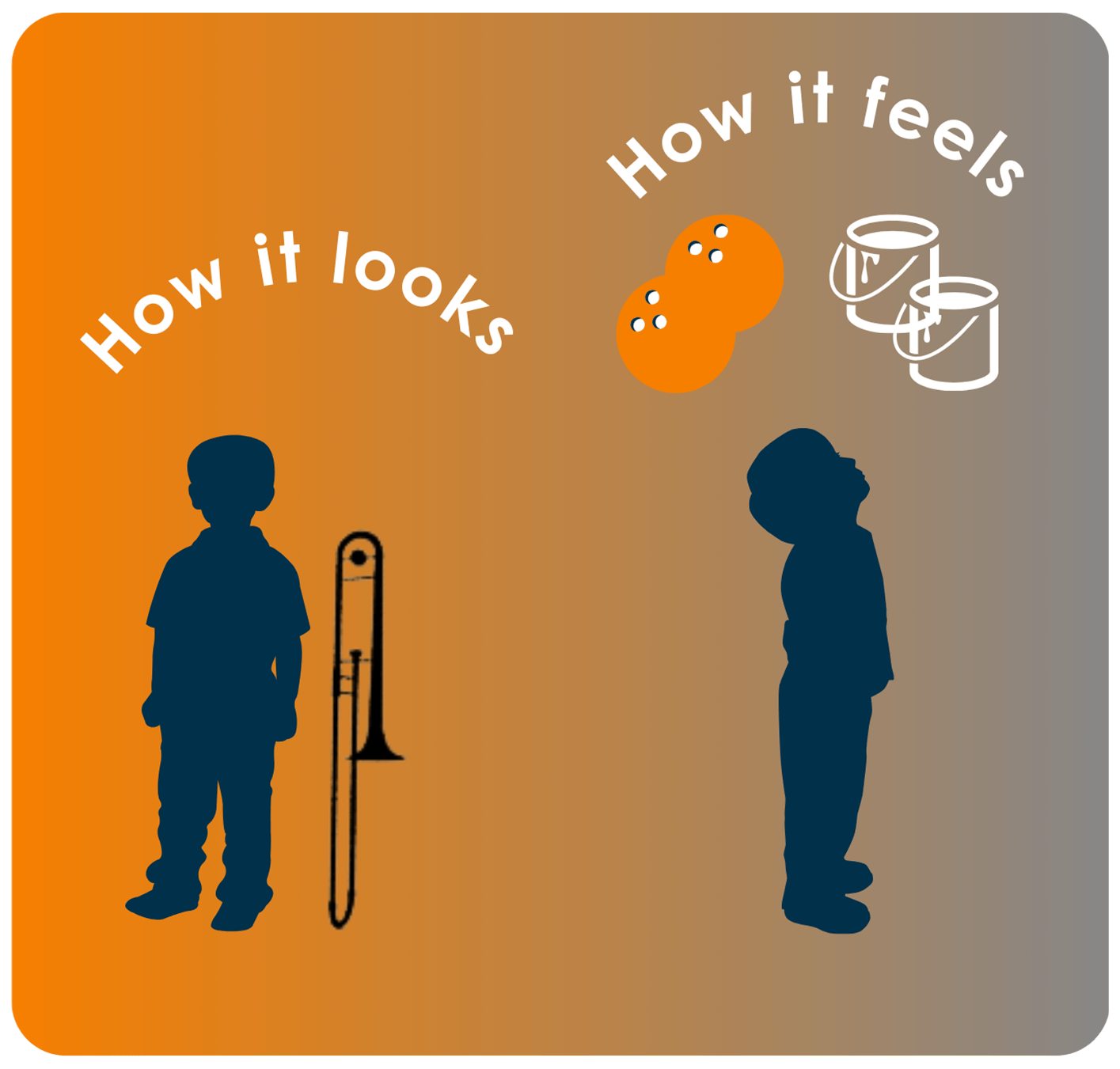
The trombone is the heaviest and most awkward of the standard beginner instruments to hold, especially for a child. With the average weight of a tenor trombone at about seven pounds, the instrument is a challenge for any beginner. Of course, both the trumpet and trombone are designed for adult players. An average sixth grader is about half the size of a full-grown adult, doubling the effective weight of a trombone to about 14 pounds. Add a hardshell case (another three-plus pounds) – and just getting the instrument to and from the locker could constitute success!
Laurlee and Russ suggested starting on the pBone. After some discussion, the director (a trombone player) gave the pBone a thorough test and decided to try it. More students were interested and chose the trombone to start.
"That first year, the director had six or eight kids who were willing to try it, including some of the female students who weren't intimidated anymore. The lighter weight and the different colors seemed to give all the students a sense of empowerment and could see the opportunity to have success."
Russ Coleman, Coles Music General Manager
"Today, we have about thirty schools using the pInstruments. We have found that those directors who start them out on the pBones have a higher percentage of trombones in their beginning band classes."
LauraLee Houghton, Coles Music Co-owner
And how did other teachers react when they brought up the idea of pBones for their beginners?
"They're always a little hesitant at first because they see a plastic instrument and it's not traditional. But once we take them through the steps that start with a pBone, it makes sense. We start students out on a plastic mouthpiece. After they get to a certain point, the director upgrades them to a metal mouthpiece. They earned the metal mouthpiece by reaching a level of skill. Then, in the same way, directors transition them over to the brass trombone. That's very exciting for the kids when they get their brass trombone, it really gives them a sense of like, ‘Hey, I've earned this. This is awesome.’ "
LauraLee Houghton, Coles Music Co-owner
These directors see the importance of moving the students to metal instruments at the right time. They use the transition as motivation and reward for hitting certain targets. “The director could decide that, on page 15 of the book, the students would receive the brass mouthpiece,” said Russ. This immediately helped their sound develop even more. Other players saw the reward and wanted it as well. Progress was sure and steady. In a few weeks, players received their metal trombones and another musical growth spurt occurred.”
"We will get an email from the teacher: ‘Little Johnny is ready for the brass trombone.’ And then, like a week later it will be 2 more, and then we'll see 2 more, and then 3, and then, before you know it, the whole section has earned their brass trombone!
It is always a struggle here in beginner bands. When they see a trombone, it is so much larger than the other beginner instruments. But, by starting on the pBone, you've got that little gig bag. It's easier to transport for the kids. It's lighter. And we do find that they tend to stick with the instrument. Once they start on the pBone, and then they earn that brass instrument, it gives them a sense of accomplishment – a sense of purpose - and they tend to stick with it."
LauraLee Houghton, Coles Music Co-owner
It also sets the program up with low brass instrumentation for the future. The student does trombone for a year, and parents or the director might see that there's an affordability issue or cost issue. Now that the student played trombone for a full school year, he or she can now transition over to school-owned euphonium or baritone or, even in middle school, maybe a tuba. So basically, you're setting the kids up for success in that lower brass section and building that foundation of sound and balanced instrumentation for higher-level ensembles.
Russ Coleman, Coles Music General Manager
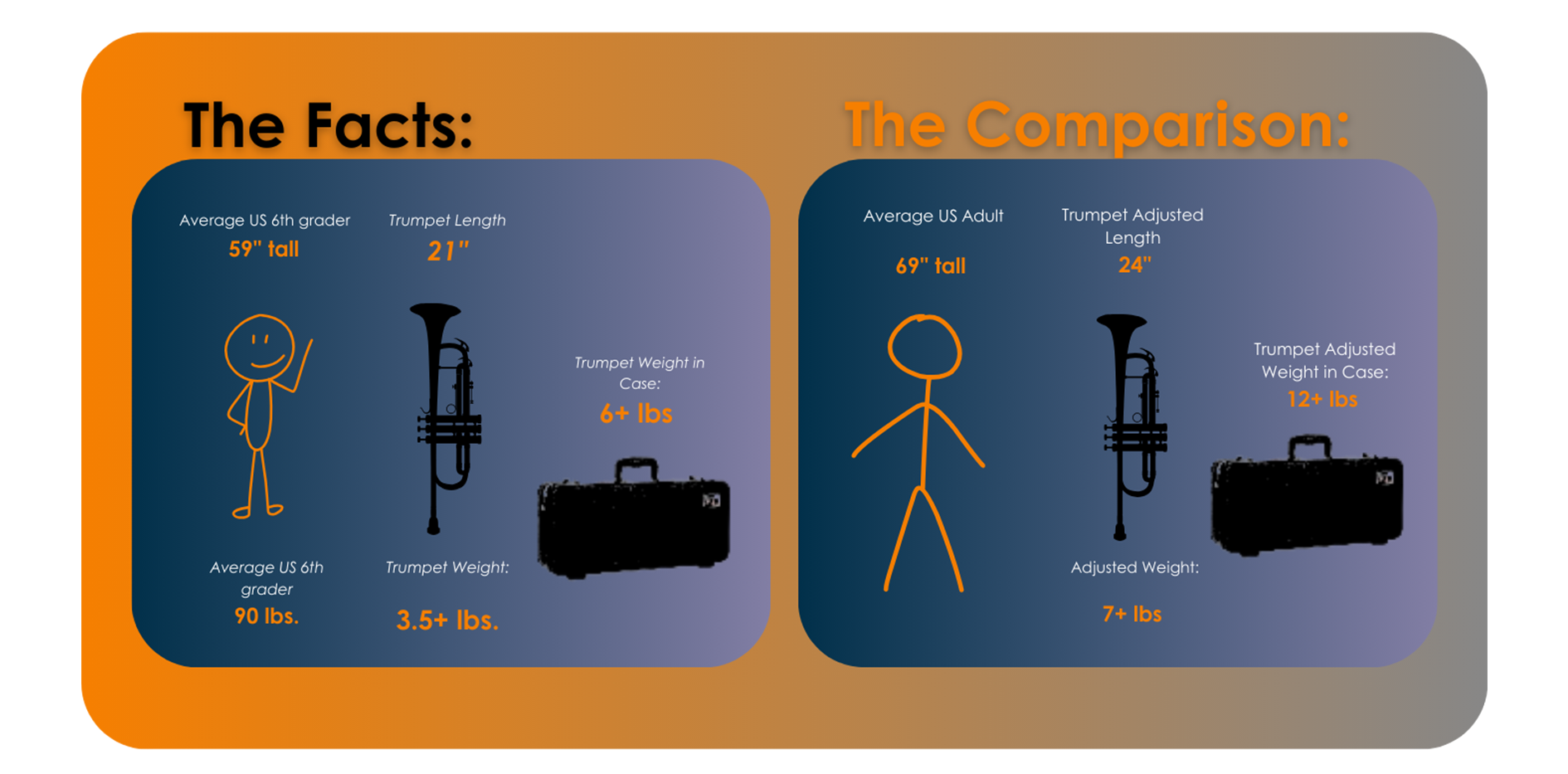
And upper brass? The trumpet isn’t as large or heavy as the trombone, but STS (sagging trumpet syndrome) still demonstrates how weight and size can impact performance. The “adult conversion” of a 6th-grade trumpet experience extends the trumpet length by over 14% and accounts for the need for greater arm extension. The weight of the trumpet doubles as well putting additional stress and strain on young arms. Seven pounds is about the equivalent of a bag of potatoes or a medium-sized cat. Try holding that up to your face for a while!
Like the pBone, the pTrumpet has a traditional sound and response. It requires little to no maintenance and is extremely durable. Changes to the original design, found in pTrumpet 2.0, provide for excellent valve action. Parts for all pInstruments are readily available. To bring the valve section even closer for the student, the pCornet is also a great choice.
"Here in New Jersey, all of our schools are town-based. We don't have big regional-based districts, like some of the other parts of our country and getting the most out of the budget is really a concern We have some programs that work with very limited amounts of money. The pInstruments give them an option to really have a successful program and still be able to afford to do so."
LauraLee Houghton, Coles Music Co-owner
The band world moves slowly. Musical traditions are very important. But giving more children the opportunity to be successful in band calls for new and innovative ideas. Out-of-the-box thinking can yield tremendous results. pInstruments are an important resource to growing band programs on a budget with authentic, affordable beginning instruments.
- pInstruments can help learners progress - and they are more accessible and affordable for schools than traditional programs. Find out about pInstruments and equity in this article.
- Younger students can get band-ready with pBuzz, our beginner brass progression tool. This article unpacks how starting sooner with pBuzz could improve your band participation.
- pInstruments like pTrumpet can be used in lots of settings. Discover how our beginner trumpet is transforming Mariachi lessons in Texas.
